
Wobbly Life
Curve GamesAdventure
4.554.00 Reviews
- Version
- 1.1.0.7
- Installs
- 10.00K
- Age Rating
- Everyone
Screenshots
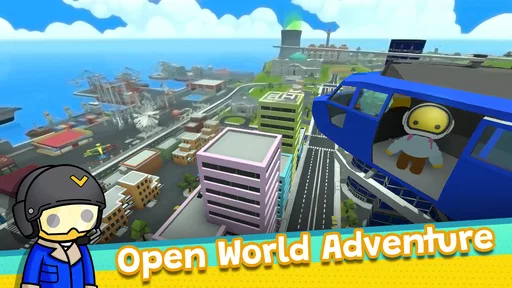
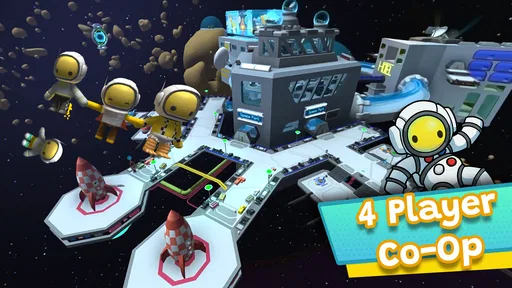
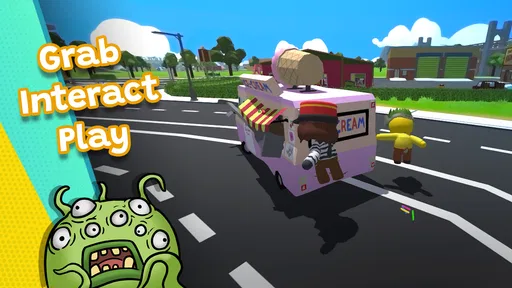
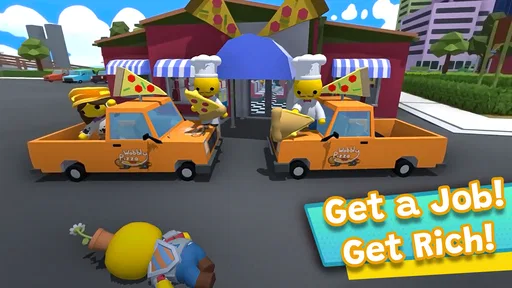

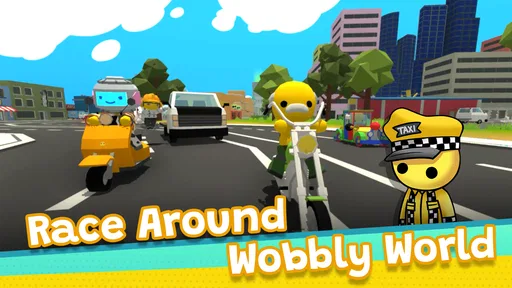
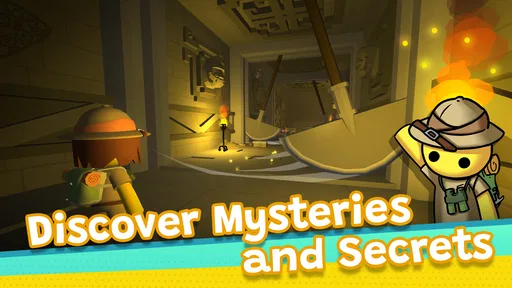
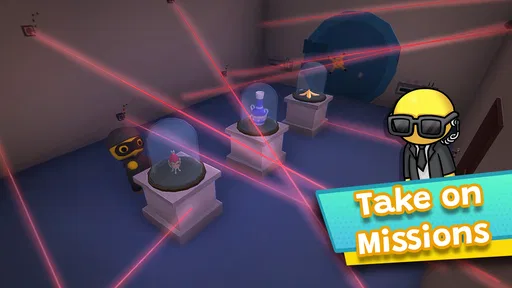
Our Review of Wobbly Life
 Analysis by Appyee
I went into Wobbly Life expecting a light adventure game built around silly physics, and that is exactly where it works best. It is a playful open-world multiplayer experience from Curve Games, designed less around perfect execution and more around seeing what happens when a flexible, wobbling character interacts with a world full of movement, vehicles, jobs, and unexpected accidents. I found myself laughing at mistakes that would have felt frustrating in a more serious game.
The appeal is easy to understand: you can explore at your own pace, try activities, earn progress through jobs, and invite other players into the same chaotic space. The game is rated for Everyone, which makes it a natural choice for families and younger players, but adults who enjoy physics-based comedy will also find plenty to like. Its current average is 4.5 from around 2.9 thousand ratings, and the game has passed 10 thousand installs, so there is already a visible audience around this particular style of open-world fun.
How the current version feels to play
The current release is version 1.1.0.7 and requires an operating system version of 11 or newer. I noticed that the experience depends heavily on accepting the game’s loose rules. Characters do not move with the precision of a traditional action hero, and objects do not always react in the neat, predictable way they would in a conventional adventure. That awkwardness is not a side effect; it is the main source of the humor.
My first useful adjustment was to stop treating every task like a mission that needed to be completed cleanly. In this game, a simple trip can turn into a chain of small disasters. A vehicle may be harder to control than expected, a jump can send the character rolling, and a routine activity becomes entertaining because the physics keep changing the situation. If you enjoy experimenting, the open world gives you reasons to wander instead of rushing directly toward an objective.
The multiplayer angle is especially important. Playing alone lets you learn the layout and understand how the activities work, but playing with friends changes the tone completely. One person can focus on a task while another creates an accidental distraction, blocks a route, or turns a normal journey into a comedy scene. The best moments come from shared improvisation rather than from simply finishing objectives.
That also explains why the game may not suit everyone. If you want a tightly scripted adventure with exact controls, dramatic storytelling, or carefully balanced challenges, the loose physics may feel imprecise. I would not choose it as a replacement for a serious exploration game. I would choose it when I want something social, forgiving, and easy to turn into a short session with friends or family.
A practical way to approach the open world
When I play, I get more from choosing a small goal before setting off. For example, I might decide to complete one job, explore a new area, or test a vehicle route rather than trying to see everything immediately. This keeps the world from feeling directionless, while still leaving room for the unexpected events that make the game funny.
A useful habit is to treat travel as part of the activity instead of as empty time between activities. The physics make movement entertaining enough to become its own challenge. If a route goes wrong, I usually continue experimenting rather than restarting immediately. That approach saves time and reveals interactions I would miss if I focused only on perfect completion.
For a family session, I would hand the controls to the younger player and let them choose the destination. Adults can help with navigation without taking over the fun. Because the game is built around playful failure, a child does not need to perform perfectly to contribute to the session. That makes it more approachable than many multiplayer adventures that punish mistakes or expect players to understand complex systems before they can enjoy themselves.
What the latest release means in practice
The release information places the game in an active current version rather than an old, abandoned build, but I would still judge it by what is available to play now rather than by assumptions about future updates. The important point for a new player is that version 1.1.0.7 is the build to look for when checking compatibility and deciding whether a device is ready for installation.
I also think the version matters for returning players. Someone who last played an earlier build should update before making a judgment about the present experience. Even when the central idea remains the same, a newer version can affect how smoothly familiar activities behave, how comfortable multiplayer feels, and whether old habits still work as expected. I would approach the update as a reason to revisit the game, not as proof that it has become a completely different product.
The developer, Curve Games, has positioned the title around accessible chaos rather than technical seriousness. That identity remains clear in the current version. I did not feel that the game was trying to compete with large, cinematic adventures. Instead, it focuses on a smaller and more focused promise: give players an open space, let physics create trouble, and make cooperation or mischief enjoyable.
That distinction is useful when comparing it with the usual alternatives in the adventure category. A story-driven open-world game normally asks me to follow characters, absorb dialogue, and complete carefully designed missions. A competitive multiplayer game usually rewards speed, accuracy, or strategic teamwork. This title sits somewhere else. It is closer to a shared toy box with goals than to a traditional campaign or competitive arena.
That makes it a strong choice for players who want low-pressure group entertainment, but a weaker choice for anyone looking for deep progression or a demanding skill curve. The price is $9.99, so I would think about the purchase in terms of how often the game will be played with others. Its value rises considerably if you have a regular partner or group willing to experiment in the same world.
Who will get the most from it
I would recommend it first to players who enjoy physics-based comedy, open-ended exploration, and multiplayer sessions where nobody minds losing control for a moment. It is also a good fit for households looking for an Everyone-rated adventure that does not require constant concentration. The simple premise makes it easy to explain: enter the world, try activities, move around, and see what happens.
It works particularly well for short evening sessions. Imagine finishing dinner and having half an hour before bed. Instead of committing to a long story mission, you can enter the world, choose a job, drive around, and let the session end after a few amusing failures. The game does not need a large time investment to produce a memorable moment, which is one of its strongest everyday advantages.
I would be more cautious about recommending it to a solo player who needs a strong narrative reason to continue. The open world can be enjoyable alone, but the social unpredictability gives the physics much of their energy. Without another person to react to the chaos, some activities may feel less surprising after the initial novelty wears off.
It is also not the best match for someone who becomes annoyed by imprecise controls. The same wobbling movement that makes a failed jump funny can make a simple task take longer. Before buying, I would ask myself whether I can laugh when a plan goes wrong. If the answer is yes, the game’s rough edges become part of the entertainment. If the answer is no, a more controlled adventure would probably be a better use of the money.
Small strategies that improve the experience
One non-obvious lesson I learned is that multiplayer roles work better when players do not all chase the same task. If everyone tries to drive, carry out the same objective, or crowd into one small area, the physics can turn cooperation into obstruction. Giving each person a loose role creates more room for the game’s accidents to be funny instead of merely confusing.
Another useful approach is to use failed attempts as information. A vehicle or activity that seems awkward at first may become easier once I understand its momentum and turning behavior. I try a route slowly, learn where the environment causes trouble, and then decide whether speed is actually worthwhile. This is more effective than repeatedly forcing the same approach and blaming the controls.
I also recommend separating exploration from progress when playing with a group. One player can look for a new place while another handles a job, then everyone can regroup and compare what happened. This prevents the session from becoming a debate over one perfect objective. It also lets players with different attention spans enjoy the same game: one can focus on movement and discovery while another prefers completing tasks.
For younger players, I would set expectations before starting. The goal is not always to win or finish quickly. Explaining that the game is about experimenting helps prevent disappointment when the character falls, vehicles behave strangely, or a plan collapses. That small change in mindset makes the Everyone rating feel meaningful, because the experience can remain friendly even when progress is messy.
Where the experience still has friction
The physics are both the game’s greatest strength and its clearest limitation. They create memorable situations, but they can also blur the difference between a player mistake and an unpredictable interaction. When I want to complete a task efficiently, the same looseness that made exploration amusing can make the process feel slower than it should.
The open-world structure can create a second kind of friction. Freedom is enjoyable when I have a plan, but it can feel vague when I am unsure what to try next. I found that choosing a simple personal objective solves much of this problem, although players who prefer a strong sequence of missions may still find the structure too relaxed.
There is also a trade-off in the multiplayer design. Shared chaos is excellent with people who enjoy joking around, but less effective with players who want coordinated progress. A group needs to agree on the mood of the session. If one person wants to explore peacefully while another wants to disrupt every plan, the game can become tiring rather than funny.
The cost deserves attention as well. At $9.99, it is not an impulse-free purchase for every family, especially if multiplayer will be rare. I would consider it a better buy for a household or friend group that expects to return to the same open world repeatedly. A player seeking a one-time story adventure may find more value elsewhere, even if this game provides a more relaxed and social kind of replay.
Questions I would consider before installing
If you are wondering whether it is suitable for a child, the Everyone content rating makes it an approachable option, but I would still play alongside younger users at least once. The main thing to explain is that the controls and physics are intentionally playful. A child who expects every movement to be exact may need help understanding that falling over is often part of the fun.
If you are deciding between solo and multiplayer play, I would choose multiplayer whenever possible. Solo exploration is still useful for learning the world and testing activities, but friends add the reactions, interruptions, and shared jokes that give the game its strongest identity. A single player can enjoy it, though the long-term appeal may depend more on personal curiosity.
If you are concerned about device compatibility, the current build needs operating system version 11 or later. I would check that requirement before purchasing rather than assuming that any recent-looking phone or tablet will run it. The game’s price also makes compatibility worth confirming in advance.
If you have already played an earlier version, updating to 1.1.0.7 is the sensible first step before evaluating the current state. I would revisit familiar activities, test multiplayer with the same group, and then explore areas or routines I previously ignored. That gives a more useful impression than relying on memories from an older build.
If you want a conventional adventure with a clear story, precise movement, and a carefully directed sequence, I would skip this one. Choose it instead when you want a playful open world that turns ordinary movement into a source of comedy. That is a narrower purpose, but the game understands it well.
My recommendation after spending time with it
Wobbly Life succeeds because it does not hide what it is. It is an adventure game built around unstable movement, open-ended play, and multiplayer situations that can become funnier as they become less controlled. Curve Games has created something that works best when players stop demanding perfection and start treating the world as a place to experiment.
I would recommend it to families, friends, and anyone who enjoys relaxed physics-based games more than dramatic storytelling. I would not recommend it to players who need precise controls or a strong solo narrative. The current version gives newcomers a clear way into the experience, while returning users have a reason to update and test the familiar world again rather than assuming nothing has changed.
My final advice is simple: buy it for the people you will play with, not only for the feature list. If you can imagine sharing a short session where a routine job turns into a ridiculous rescue, a failed drive becomes the highlight, or everyone abandons the original plan to investigate something nearby, the $9.99 price is easier to justify. If you will play alone and want structured adventure above all else, another game will probably serve you better.
For the right audience, though, the awkwardness is the point. I came away feeling that its strongest design choice is also its most honest one: it lets the physics create stories instead of forcing every memorable moment through a script. That makes the experience uneven at times, but it also gives each multiplayer session room to become its own small, unpredictable adventure.
Verdict
Strengths of Wobbly Life
- Fun physics-based gameplay with plenty of silly moments
- Large open world encourages exploration and experimentation
- Many jobs and activities provide varied ways to earn money
- Local split-screen multiplayer makes it enjoyable with friends
- Frequent customization options for characters, vehicles, and homes
Limitations of Wobbly Life
- Physics can feel unpredictable and frustrating during precise tasks
- Some activities become repetitive after extended play sessions
- Performance may vary on older phones and tablets
- The mobile version may require substantial storage space
- Progress can feel slow when unlocking certain items and vehicles
Similar Picks in This Category
View All
Roblox
Roblox Corporation4.2

Pokémon GO
Niantic, Inc.3.5

Ninja warrior: legend of adven
TOH Games4.6

Ninja Arashi
Black Panther4.6

Eyes - The Horror Game
Fearless Games sp. j.4.5

Critical Action:Gun Strike Ops
FPS Shooter & Action Game4.3
Frequently Asked Questions
What is Wobbly Life, and what can you do in the game?
Wobbly Life is an open-world sandbox adventure focused on exploration, mini-games, jobs, vehicles, and playful physics. You control a customizable wobbly character and can explore the island, earn money through different activities, purchase items, and discover hidden areas. The game is designed to be relaxed and humorous rather than competitive, making it suitable for players who enjoy freely experimenting and creating their own objectives.
Is Wobbly Life available on Android and iOS?
Wobbly Life is primarily known as a PC and console game, so availability can vary depending on the platform and region. Before downloading anything advertised as Wobbly Life for Android or iOS, check that it comes from an official store or verified publisher. Unofficial mobile versions, imitations, and misleading listings may not offer the same game and could create security or performance concerns on your device.
Can Wobbly Life be played in multiplayer mode?
Yes, Wobbly Life supports cooperative play, allowing friends or family members to join the island and complete activities together. Multiplayer makes jobs, driving, exploration, and mini-games more entertaining because players can cooperate or simply cause amusing chaos. The exact multiplayer features may depend on the platform and version, so it is worth checking the current store description and system requirements before purchasing or installing the game.
Is Wobbly Life suitable for children?
Wobbly Life uses colorful cartoon visuals, simple objectives, and slapstick humor, making it approachable for many younger players. However, parents should still review the platform’s age rating, online multiplayer options, chat features, and purchase settings before allowing children to play. Because the game encourages open-ended exploration, supervision may also be useful for younger users who need help understanding controls or navigating online interactions.
Does Wobbly Life require an internet connection or powerful hardware?
The requirements depend on the platform and the way you intend to play. Some versions may support offline gameplay, while online cooperative features naturally require a stable internet connection. Wobbly Life also includes an open world with physics-based interactions, so older computers or supported devices may experience slower performance. Check the official system requirements, available storage, controller support, and update information before downloading.
Play our best games!


